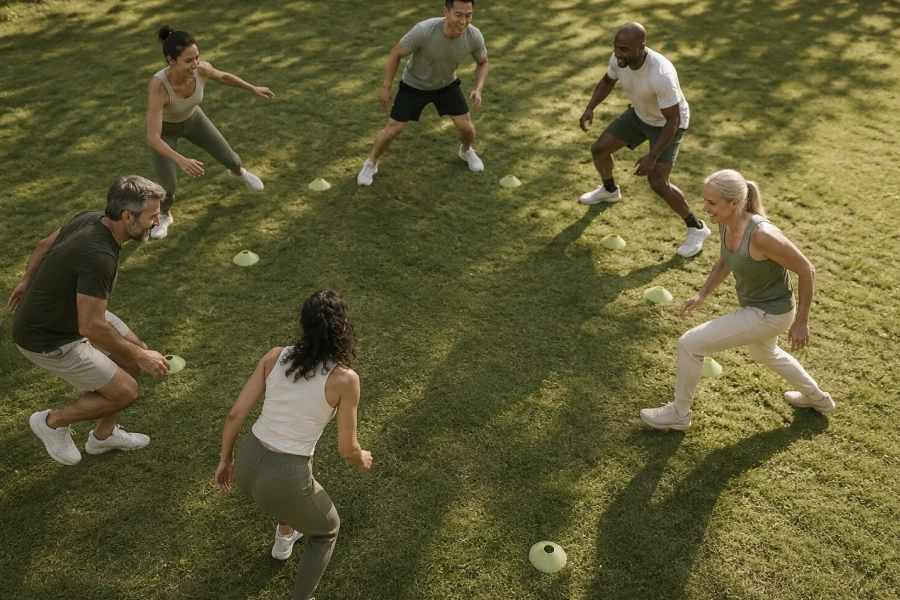
Team bonding activities for adults do not need to feel like another meeting. The best ones give people a reason to move, solve, or laugh together. They fit naturally before practice, after a game, or during a team day. Adults usually respond better to participation than forced disclosure. A shared task lets personalities show without demanding a personal speech. Good activities also keep the rules easy to understand. Nobody should need special athletic ability to join. The aim is comfort, not a polished performance. When the energy feels low pressure, people participate more honestly. That is where useful team chemistry begins. That is a better foundation than any activity designed simply to fill time.
A simple cooperative challenge can reveal more than a long icebreaker. Try a relay that depends on timing rather than speed. Set up a casual obstacle course with enough room for different approaches. Ask pairs to solve a physical problem with one shared piece of equipment. The focus should stay on collaboration, not elimination. A resource about adult recreational leagues can spark ideas that fit a mixed-skill group. Keep the directions brief and visible through demonstration. Give everyone a moment to ask questions before starting. That small pause prevents confusion from becoming embarrassment. Clear structure makes play easier for the entire group. People participate more freely when the goal is visible and the atmosphere stays generous.
The most memorable exercises give every person a useful contribution. One teammate may notice details while another keeps the pace. Someone else may help the group reset after a mistake. Those small roles show people how different strengths work together. Build activities around a goal the whole group can celebrate. Choose a target that is realistic within ten or fifteen minutes. A few thoughtful teammate trust building and casual team-building activities can make the process feel less generic. Celebrate progress during the activity, not only the final result. That keeps quieter participants involved. Shared success feels stronger when everyone can see their part in it. The lesson carries into regular play because teammates have practiced noticing one another.
Humor helps teams relax, but it should never depend on embarrassment. Avoid games that require someone to sing, confess, or become the center of attention. Instead, use challenges that allow people to laugh at the situation together. A missed toss or unexpected route can become a friendly moment. Keep teams small enough that no one disappears into the background. Rotate partners so familiar cliques do not control the experience. Watch the room for signs that people need a simpler option. Adjusting early shows respect for the group. Respect makes future participation more likely. A good activity leaves people lighter, not drained. A respectful structure lets different personalities contribute without feeling exposed.
A clear ending gives the experience its own rhythm. Bring the group back together for one brief reset. Ask what worked without demanding a formal debrief. Let people share one useful observation if they want to. Then connect the activity to the next practice or game. Suggestions from community sports connections can help shape that transition. A short closing keeps the energy from fading awkwardly. It also helps people carry the good mood into regular team time. End while enthusiasm is still present. That restraint makes the next activity easier to anticipate. The goal is a positive memory, not an exhausted crowd. That memory becomes a reason to look forward to the next gathering.
Teams benefit most from rituals they can repeat without much planning. A five-minute challenge before each session can become part of the culture. So can a rotating partner warm-up or simple post-game question. Keep the format consistent while changing the details. That balance creates familiarity without monotony. Invite teammates to suggest variations over time. Their input gives the tradition a sense of ownership. When an activity becomes expected, newcomers can join more easily. The ritual then works as a gentle welcome signal. It tells people that the team makes room for connection, not only competition. Small repeated rituals can make a group feel more recognizable from week to week.
No activity can manufacture closeness on command. What it can do is make future conversation less difficult. People remember who encouraged them during a challenge. They remember who handled a mistake with kindness. Those impressions can change the tone of later practices. Choose one activity that fits your group’s current energy. Test it, listen, and adjust the next time. Keep the standard simple: did people seem more comfortable afterward? When the answer is yes, the activity has done meaningful work. Over time, that comfort can become trust. Trust is the part that lasts beyond the whistle. The best version of connection leaves people with something they want to repeat.




Leave a comment