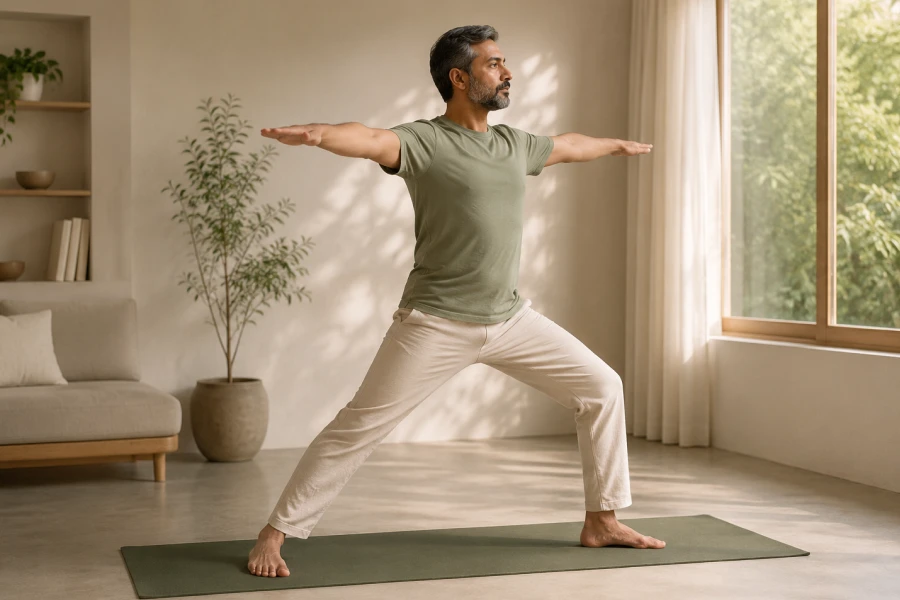
Yoga for beginners at home does not require a dramatic transformation of your space. A small clear patch of floor is enough to begin. Many people delay because they imagine they need flexibility, gear, or long blocks of time. Those expectations can make a simple practice feel complicated. Start by lowering the threshold for participation. Wear clothing that lets you move comfortably. Choose a time when interruptions are less likely. Keep the first session short on purpose. Let your body set the pace rather than chasing a picture of perfect form. A gentle beginning makes it easier to return tomorrow. Starting small also gives you more freedom to discover what kind of practice you enjoy.
The first decision is usually whether the practice feels possible today. That is why setup matters before any pose begins. Roll out a mat, towel, or blanket where you can leave it visible. Keep the space uncluttered enough that you can start without rearranging furniture. A little planning can turn hesitation into action. Consider using gentle home yoga practice ideas that meet you at your current comfort level. Make the first movement slow and uncomplicated. Pause whenever you need to orient yourself. A beginner session should feel like an invitation, not a test. When starting feels easy, repetition becomes more likely. An inviting corner can make the decision to move feel much less significant.
A home setting gives you permission to adapt. You can bend your knees, shorten a stance, or use a chair for balance. You can rest without feeling like someone is watching. That freedom is part of the value of practicing at home. Look for steady breathing rather than a dramatic stretch. Choose movements that leave you feeling more settled afterward. Resources on simple yoga movement can offer approachable ways to explore. Let discomfort be information, not a challenge to override. Back off when a position feels pinchy or sharp. Your practice should support awareness, not prove endurance. That choice keeps the practice connected to comfort, awareness, and personal pacing.
Pace shapes the entire experience. Some days you may want several slow movements in sequence. Other days, one stretch and a few breaths may be enough. Both options can count as practice. Move slowly enough that you can notice how each position feels. Add pauses between shapes if that helps. Avoid rushing simply because a video or plan has a certain length. Your body does not need to match anyone else’s timing. The purpose is to develop a relationship with movement. That relationship grows through consistency and attention. It does not need to be loud or impressive. A gentle tempo makes each session feel available even when your energy is limited.
Short sessions are often easier to protect than long ones. Ten minutes before a shower can be enough. A few movements after work can create a transition into the evening. Keep your expectations small enough that a busy day still has room. You can return to the same two or three poses whenever you want. Familiarity makes practice feel more accessible. It also helps you notice gradual changes in comfort. Do not discount a session because it was brief. A small reset can still change the tone of an afternoon. The value comes from showing up, not from duration alone. Brief practices can still build the familiarity that makes movement feel more natural.
A consistent practice usually starts with a consistent cue. Maybe you step onto the mat after making coffee. Maybe you move before changing into evening clothes. Build the cue around something that already happens. Helpful home yoga habit building can make that link easier to strengthen. Keep the follow-through modest at first. If you miss a day, resume without trying to compensate. The next available moment is enough. A relaxed return protects the practice from becoming another obligation. Over time, the mat can become a familiar place to pause and reconnect. That return is what eventually turns a short practice into a dependable ritual.
Home yoga becomes more rewarding when you allow it to remain personal. You do not need to compare your range of motion or your routine. You only need a practice that feels safe and worth repeating. Notice what helps you breathe more comfortably. Notice which movements make your shoulders or hips feel less tense. Keep those observations simple. Let them guide the next session. The practice can change as your day changes. That flexibility is a strength, not a weakness. A beginner-friendly routine grows from attention. It starts with the willingness to begin where you are. There is plenty of room for the routine to grow only when you are ready.



Leave a comment