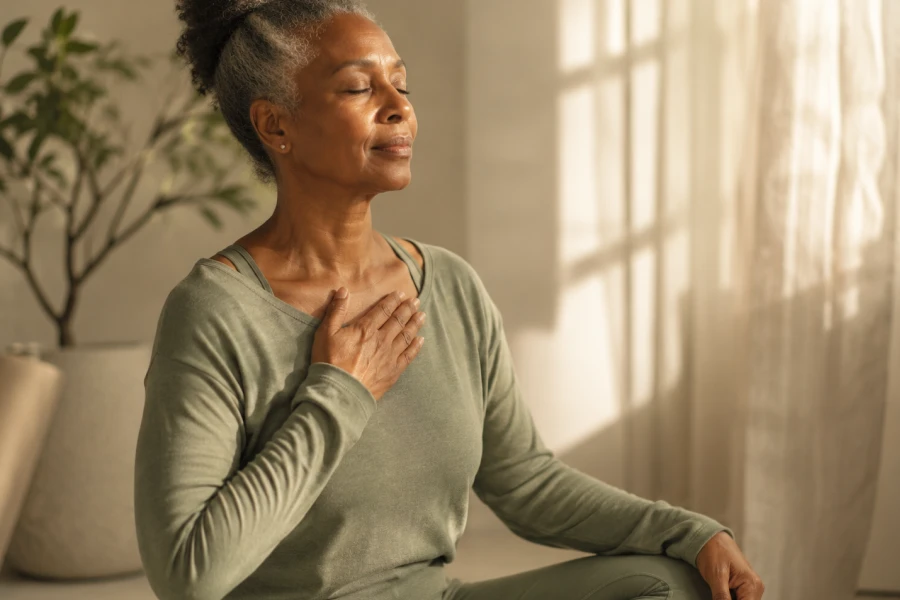
Breathing exercises for beginner yoga can make a new practice feel less mysterious. Breath gives your movements a pace when everything else feels unfamiliar. It can also offer a simple place to return when your attention wanders. You do not need to force a dramatic inhale or exhale. Begin by noticing the breath you already have. Feel where it moves in your ribs, chest, or belly. Let your shoulders soften if they are working too hard. A few quiet breaths can change the tone of a session. The aim is comfort, not control. That makes breathing a useful companion for beginners. The simpler the starting point, the easier it is to notice what the breath is already doing.
A longer exhale can create a sense of slowing down. Try letting the out-breath finish before you move into the next shape. Keep the count gentle rather than strict. Your body should not feel like it is competing with a clock. Helpful yoga breathing basics can make this approach easier to explore. Notice whether a slower pace helps your shoulders or jaw soften. If it does not, return to a normal rhythm. Breath should feel supportive rather than demanding. The practice becomes clearer when you can move without rushing. That clarity helps beginner poses feel more approachable. This gentle pacing can keep the session grounded even when your mind feels busy.
Each movement can have a natural breath rhythm. You might inhale as you lengthen through the spine. You might exhale as you fold or release tension. Breathing exercises for beginner yoga become helpful when they follow this simple pattern. Do not worry about getting every moment exactly right. The connection between breath and movement can stay flexible. If you lose the rhythm, pause and begin again. A calm reset is part of the practice. Let your breath be an anchor, not another instruction to master. That approach makes it easier to remain present in your body. A flexible rhythm makes room for learning without turning breath into another performance.
Comfort should guide every breath practice. Avoid holding your breath unless a qualified teacher has shown you a safe reason. Do not push the inhale until your chest feels strained. Let the breath stay smooth and quiet. An easy yoga sequence at home can give you room to explore without rushing. Sit or lie down if standing movements feel distracting. Use a hand on the belly or ribs if that helps you notice the breath. Then release the hand when you no longer need it. Small adjustments can make the experience feel more accessible. The best rhythm is the one your body can sustain comfortably. Comfort creates the conditions for breath awareness to become both clear and sustainable.
Before you begin, take a moment to notice the room. Feel the floor beneath you. Notice the temperature, sounds, and light without judging them. This simple orientation can make the first breath feel easier to find. It also gives your attention somewhere concrete to land. You do not need a silent room for practice to work. You only need permission to come back when distractions appear. Let the environment be part of your awareness. That can reduce the urge to force a certain feeling. A calm session often begins with accepting what is already present. That orientation offers a dependable way to start even when the surroundings are imperfect.
A short breath-centered practice can fit almost anywhere in the day. Sit on the edge of a bed before starting work. Pause in a chair after a long meeting. Take a few steady breaths before stepping onto the mat. Explore breath-led yoga practice as a way to make these pauses feel intentional. You do not need a full class to benefit from attention. A minute of noticing can create a useful transition. Keep the practice simple enough to remember. Repetition will make it feel more natural. Over time, the breath can become a familiar cue for slowing down. A repeated pause can make the skills of yoga feel available outside formal practice time.
Breath work can travel beyond formal yoga time. Use a slower exhale before a difficult conversation. Notice your breathing while waiting in traffic or standing in line. These moments can reconnect you with the same calm attention you practice on the mat. Keep expectations gentle in everyday settings. You are not trying to erase stress instantly. You are practicing the ability to notice and respond. That skill grows through ordinary repetition. Start with one moment you already experience each day. Let the breath meet you there. Over time, that small habit can make the entire practice feel more connected. It is a small practice, but it can offer a reliable way to return to the present.



Leave a comment