A home yoga routine for beginners becomes easier when it has a clear place in the day. A practice does not need to happen at sunrise to be useful. It can begin after a work call, before dinner, or during a quiet weekend hour. The most important thing is choosing a cue you can recognize. Cues reduce the need to decide again and again. They also make starting feel more automatic. Keep the first routine brief enough to fit ordinary days. Let the sequence feel familiar rather than ambitious. Repetition builds confidence faster than complexity. A steady cue can turn intention into an actual habit. That gentle predictability makes the practice easier to protect when life gets full.
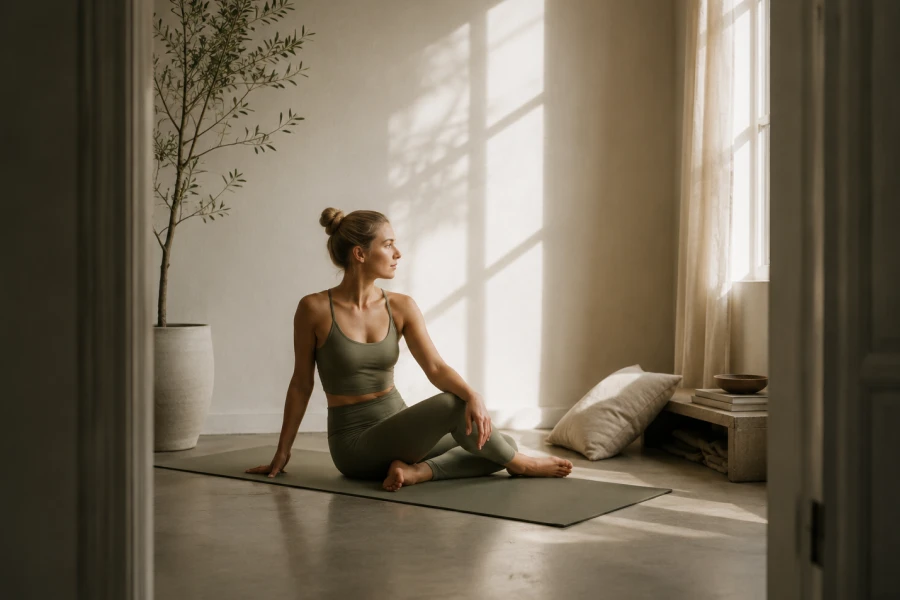
Leave the tools of practice where they invite you back. A mat behind a closed door is easy to forget. A rolled mat beside the sofa is easier to notice. Keep a blanket, cushion, or block nearby if you use them often. Create a corner that feels comfortable without becoming precious. A little visual reminder can lower the barrier to movement. Helpful low-pressure yoga sessions can make the first step feel more welcoming. You do not need a perfect room. You need a space that makes beginning feel possible. Even a small cleared area can become part of your routine. The goal is access, not a showroom. A visible setup turns the room itself into a quiet reminder to take care of yourself.
Different days call for different amounts of movement. Some mornings may allow a longer sequence. Other days may only leave time for breathing and a gentle stretch. Home yoga routine for beginners should account for both possibilities. Create a short version and a slightly longer version. That gives you a way to practice without arguing with your schedule. Keep the movements simple enough that you can remember them. Use repetition to reduce the need for decisions. When the day is busy, choose the shorter version without guilt. Flexibility protects the habit from all-or-nothing thinking. It keeps the routine attached to real life. A routine that can shrink is far more likely to survive a crowded calendar.
Transitions are often the easiest times to practice. Movement can help you leave work behind before dinner. It can offer a small reset between errands and family responsibilities. A few minutes on the mat can also signal that the evening is slowing down. Choose one transition that happens often. Then attach a simple sequence to it. Explore mindful movement at home as a way to create this boundary. The routine does not need to solve the entire day. It only needs to give you a moment of attention. That moment can become a reliable source of calm. That brief boundary can make the rest of the day feel easier to enter or leave.
Track how you feel after practice instead of chasing milestones. Notice whether your shoulders feel easier to settle. Notice whether your breath slows more quickly. Pay attention to the movements you naturally want to repeat. These observations are more useful than comparing yourself to a pose online. They help you build a routine around what supports you. Keep a short mental note rather than a complicated log. Comfort is a valid measure of progress. It tells you the practice is meeting your current needs. That is a strong reason to continue. Those signals can help you choose the version of practice that serves you best.
Habits grow when they are easy to resume. Missing a day does not mean you need to restart from zero. Return to the mat for three breaths or one familiar stretch. Information about yoga practice consistency can help you keep the focus on return, not perfection. Protect the relationship with the routine by keeping the tone gentle. Do not turn a missed session into a reason to stop. The next available moment is enough. Over time, those small returns create a dependable pattern. The pattern becomes stronger because it can survive real life. That is what makes a routine useful for the long term. A forgiving routine remains useful because it does not punish the realities of a busy life.
A beginner routine should feel like something you own. You can change the time, shorten the sequence, or use more support. Keep the parts that help and release the parts that feel like chores. The practice may look different from one month to the next. That is normal. What matters is that it remains available to you. Let the mat become a familiar invitation rather than a demand. Choose the next session based on what feels possible today. A few quiet minutes can be enough. The routine becomes meaningful through repetition, attention, and permission to adapt. That kind of ownership gives a simple routine its staying power.



Leave a comment