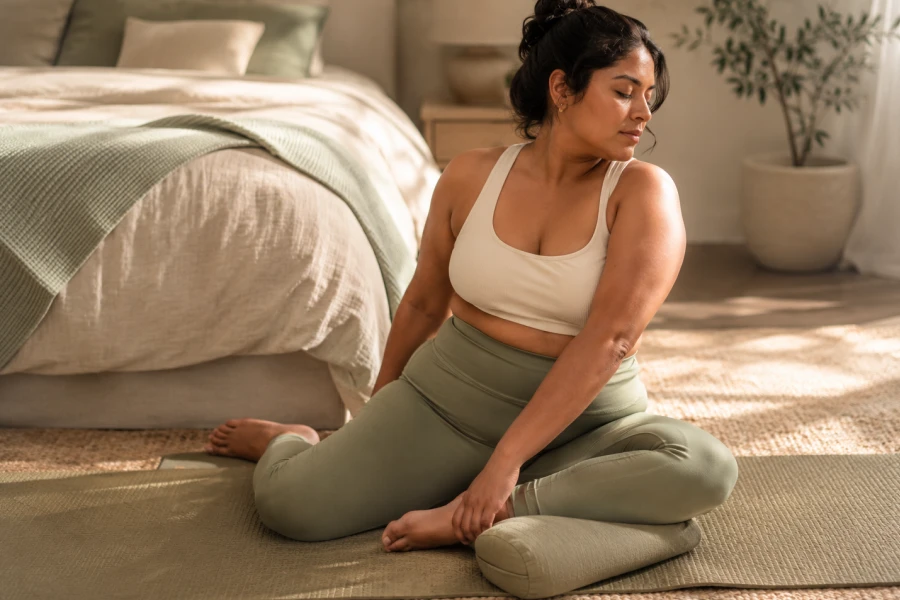
Beginner yoga poses at home are most helpful when they encourage curiosity. The goal is not to copy the deepest version of a shape. It is to learn where your body feels steady and supported. Start with uncomplicated positions that let you breathe easily. Move slowly enough to notice what changes when you adjust. A home practice gives you room to pause. You can try a shape, rest, and try again. That process builds confidence without pressure. Keep the first week light and manageable. The most important outcome is feeling willing to return. Gentle curiosity gives your first week a steadier foundation than pressure ever could.
Choose positions that give you clear feedback. A seated fold, gentle twist, or supported child’s pose can reveal a lot. Notice where you feel stable before trying to go deeper. Keep your breath smooth while you explore. If a position feels awkward, make it smaller. Useful accessible yoga modifications can show how props and adjustments create more room. A folded blanket can support your hips. Using a wall can help with balance. A chair can make standing work feel more comfortable. Support does not reduce the value of the pose. It helps you practice with more attention. These options let you learn through experience instead of trying to force a particular outcome.
Stability is a useful measure for beginners. You may feel it through your feet, hands, or the floor beneath you. Start by arranging your body so you can breathe without strain. Then make one small adjustment and notice the result. Beginner yoga poses at home become more informative when you move slowly. Do not rush from one shape to another. Let each position teach you something about balance and space. Your body may prefer a bent knee or wider stance. Honor that preference when it helps you stay steady. Learning this language of comfort is part of the practice. That patience builds a clearer relationship with the sensations that matter most.
Props are tools for better access, not signs that you are doing less. A pillow can make a seated position more comfortable. Blocks or sturdy books can bring the floor closer. A strap or towel can extend your reach gently. These supports can make it easier to stay in a position calmly. Explore calming yoga stretches that let support become part of the movement. Set up what you need before you begin. That way, you can stay focused instead of interrupting the session. Choose materials that feel stable and safe. Thoughtful setup can make a simple practice feel much more welcoming. More support can often reveal the intended shape more clearly than unnecessary strain.
A short sequence can feel complete without including many poses. Try moving between three familiar shapes at an unhurried pace. Pause in a resting position whenever you need to. Let your breath decide when to transition. You do not need to perform a continuous flow. A few clear movements can be enough for a satisfying session. The key is choosing shapes you understand well. Repetition makes them easier to recognize in your body. That recognition builds confidence. It also helps you avoid treating every practice as a new challenge. A relaxed pace makes it easier to leave each session feeling capable instead of depleted.
Confidence grows through friendly repetition, not through forcing progress. Return to the same starting poses until they feel less unfamiliar. Add one new option only when you want some variety. Helpful beginner pose confidence can support a pace that feels realistic. Notice small changes, such as a steadier balance or calmer breath. Let those observations count as progress. There is no deadline for mastering a shape. Your body may respond differently from day to day. A flexible attitude keeps practice useful. It also gives you permission to learn without judgment. The practice becomes more useful when it honors learning rather than demanding mastery.
The best first-week practice is one you can imagine doing again. Keep the room comfortable and the instructions simple. Choose a time when you do not feel rushed. Leave enough space to stop before you are tired of the routine. A few intentional movements can reset your attention. They can also help you notice how your body feels after sitting or working. Treat those observations as useful information. Build from there gradually. Home practice does not need to look dramatic to be meaningful. It only needs to feel safe, manageable, and worth revisiting. This mindset creates enough safety for movement to become a lasting part of your week.



Leave a comment