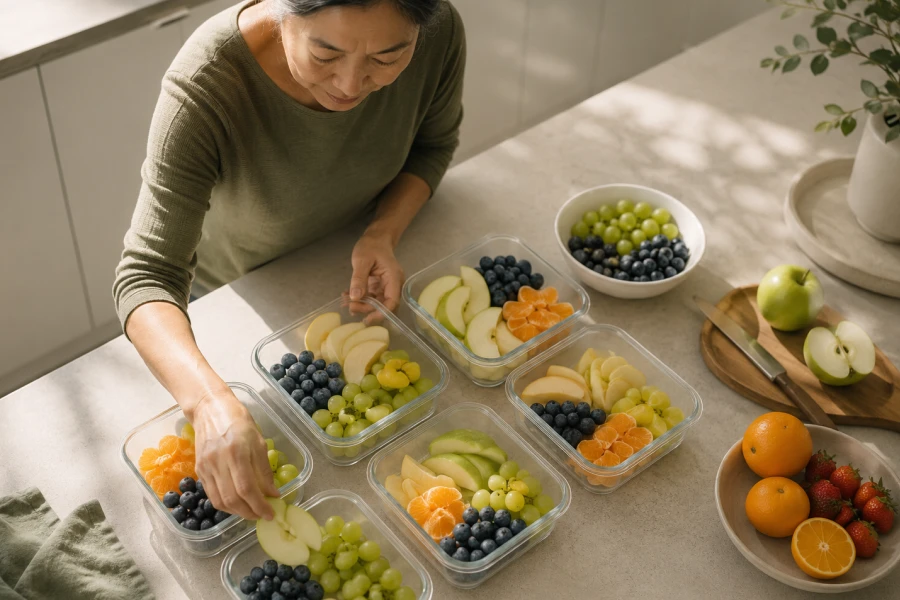
Fruit meal planning for weight loss works better when it avoids perfectionism. You do not need seven identical containers lined up in a refrigerator. You need a few foods that make ordinary meals easier to assemble. Fruit can play different roles across the day. It can brighten breakfast, add texture to lunch, or make a snack feel more complete. The practical question is not what looks impressive online. It is what you will enjoy using before it spoils. Start with one or two simple combinations. Let the plan develop through use, not through pressure. A flexible approach is easier to maintain during real weeks. A useful plan should leave room for both routine meals and unexpected changes.
Planning begins with repeat ingredients rather than a flawless schedule. Choose fruit that can appear in more than one meal. Berries can work with yogurt, oats, or a quick dessert. Apples can travel, slice into salads, or sit beside a sandwich. A short collection of fruit prep routines can help you prepare without overfilling your kitchen. Think about what needs washing, what needs slicing, and what can remain whole. Keep that work small enough to finish quickly. A few prepared ingredients can create several easy options. That is more useful than a complicated plan you abandon by Wednesday. Repetition gives meals structure without taking away flexibility. That approach keeps your preparation focused without making food feel overly controlled.
The grocery store can act as a cue for the week ahead. Before you shop, think about the meals you already know you will have. Add fruit that matches those moments. Consider a few grocery shopping for fruit, fresh fruit meal ideas, and easy fruit-based meals that fit your normal pattern. Buy quantities that make sense for your household. Include one sturdy option for later in the week. Add one delicate option for the first few days. This simple order helps reduce waste without demanding a detailed spreadsheet. It also makes shopping more focused. The best cart is not the fullest one. It is the one that supports the meals you can realistically make. Clear ingredients make it easier to build meals even when the week shifts unexpectedly.
Small combinations are easier to use than large promises. Keep fruit near foods you already reach for at breakfast. Add a sliced piece to a lunch box beside something savory. Make a bowl when you have more time at home. The format can change without disrupting the habit. Use leftovers creatively instead of treating them as a failure. A soft banana can become part of breakfast. A handful of berries can finish a simple meal. Flexibility prevents minor changes from feeling like derailments. It also helps food stay enjoyable. A useful plan is one that gives you options, not restrictions. A flexible combination can save a meal without requiring another trip to the store.
Travel changes what a meal plan needs to do. Commuting, school pickups, and busy errands all create different constraints. Keep fruit that can handle a bag or car ride when needed. Bring a small container for cut fruit only when you can store it safely. Choose pairings that make sense for the time available. You do not need the same meal every day. Instead, keep a few building blocks ready. Those building blocks can move with your schedule. This is what makes planning feel supportive instead of controlling. Convenience becomes a feature rather than an afterthought. A plan earns its value when it helps on the busiest days, not only the quiet ones.
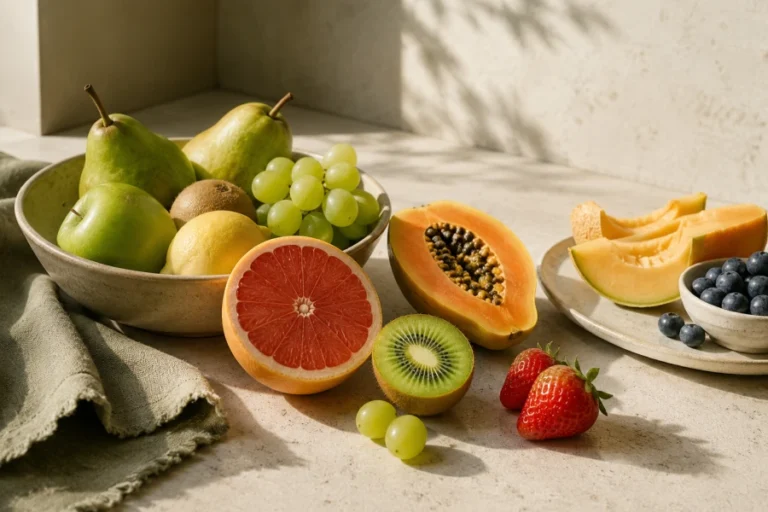
Seasonal shifts can refresh a routine without requiring a new system. Spring berries may replace winter citrus for a while. Summer melon can sit beside meals that once used apples. Let availability and price influence your choices. That keeps the plan grounded in real shopping conditions. It also introduces variety without forcing novelty. Keep one or two favorites as anchors. Then let the rest change naturally. This approach makes food planning feel responsive. Responsive habits are easier to carry through busy months. They leave enough room for enjoyment and adjustment. Simple seasonal adjustment can keep a familiar routine feeling fresh and realistic.
Fruit habits do not need a dramatic reset after an uneven week. You can return with a short grocery list and one prepared bowl. Notice the choices that felt easiest to repeat. Then bring them back into your next shopping trip. Strong everyday fruit habits often succeed because they are not elaborate. They have a clear place in the kitchen and day. A few simple options can support larger goals without becoming the whole project. Give yourself room to revise the pattern as needed. Practical planning is built through small decisions. Those decisions become valuable when they keep showing up. The result is a food rhythm that feels supportive rather than demanding.



Leave a comment